Private Duty Nursing
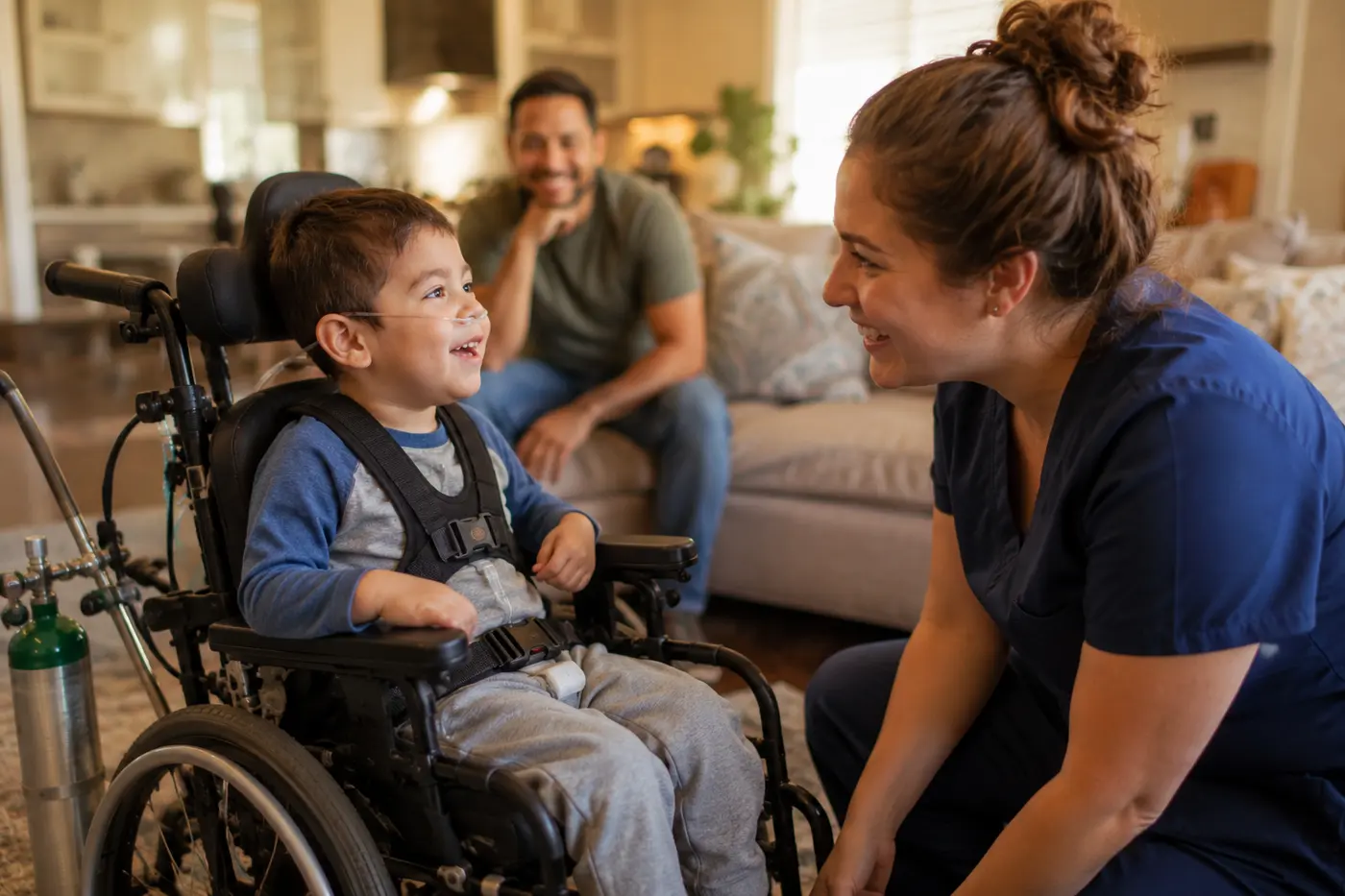
RN or LPN one-to-one nursing for medically complex children, in the home.

Marvallous Always Cares.
Skilled in-home nursing for medically complex children — vent, trach, G-tube, seizures — delivered by RNs and LPNs trained in pediatric private duty. Shifts run up to 12 hours, and we build round-the-clock coverage from a small, consistent rotation of nurses your child knows.
Please note: our home health agency licence application is pending with Florida AHCA. We are taking enquiries now and will confirm coverage and start dates once licensure and payer enrolment are complete.
Our standard
Every nurse we put on your child's case has to pass a single question first: would we trust them with our own child? If the answer is anything but an absolute yes, they don't make it onto the schedule.
FDLE fingerprint, drug testing, licence verification, AHCA exclusion check.
Minimum one year of pediatric private duty. Hospital floor RN experience preferred.
Vent settings, seizure protocol, feed rates, communication device — before the first shift.
You teach us your child's cues. We don't move to solo shifts until you say go.
Types of care
Pediatric Private Duty Nursing (PDN) and the supporting hours that hold your family together.
RN or LPN one-to-one nursing for medically complex children, in the home.
Ventilator management, trach changes, suctioning, and emergency response.
Pump management, bolus feeds, button site care, and refeed protocols.
Protocol-driven response, rescue medication, and post-ictal monitoring.
Planned breaks for parents, with a trained nurse holding every routine and protocol.
Discharge coordination, equipment setup, and a nurse at home for the day you come home.
Around the nursing hours
Because a care plan that only covers the medical hours leaves the rest of family life to fend for itself.
Conditions we support
Our pediatric nurses don't get assigned to your home until they've trained on your child's specific equipment, protocols and routines.
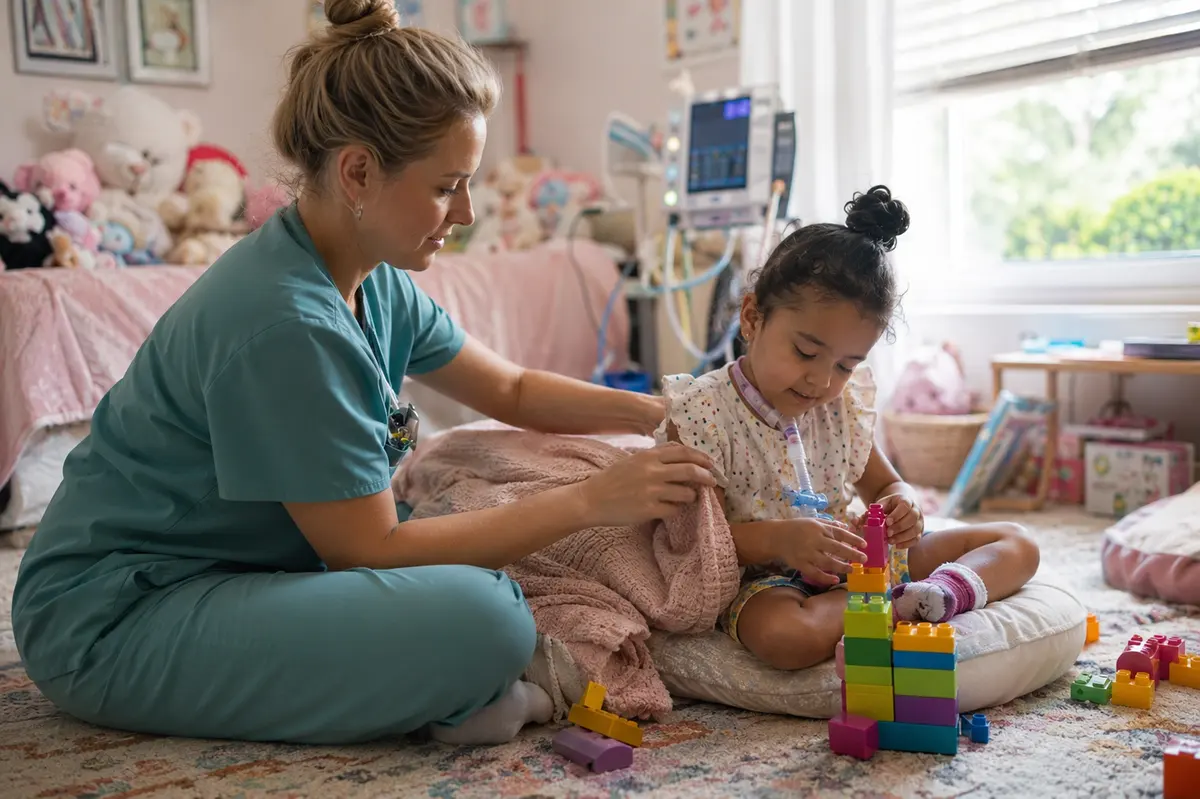
Trilogy, LTV, Astral. Settings management, alarm response, weaning support.
Inner cannula changes, suctioning, emergency response, decannulation.
Refractory epilepsy, Lennox-Gastaut, VNS, rescue protocols.
Positioning, transfers, feeding support, therapy reinforcement.
Single ventricle, HLHS, post-surgical recovery, saturation monitoring.
Apnoea monitors, oxygen, NG/G-tube feeds, growth tracking.
Catheterisation, bowel programme, shunt monitoring, skin care.
SMA, muscular dystrophy, oncology, rare genetic diagnoses — and more.
The Care Match
Most of our families come from the hospital. We coordinate with your discharge planner so home is ready before you are.
A short call or hospital meeting. Diagnoses, equipment, schedule, hopes for home life.
An RN meets your child and builds the plan, and our team will handle the authorisation paperwork with your payer.
Your assigned nurses train with you and your child's discharge team. You sign off before solo shifts begin.
We aim to have the nurse in place and the equipment set up for the day your child comes home.
What care looks like
Illustrative examples of how a plan of care comes together. Not real clients.
Ventilator-dependent, trach, G-tube. Discharged home at 14 months after the family trained alongside the nursing team in the unit. Mum went back to work part-time once overnight coverage was stable.
A week in the life
Refractory epilepsy, VNS, mild cerebral palsy. An LPN covers days at home so her mother can work, plus overnight respite blocks so both parents can actually sleep.
A week in the life
Cerebral palsy, G-tube, scoliosis after rod placement, a complex medication regimen. He lives at home with both parents and two siblings. The family wanted real life back without losing continuity of care.
A week in the life
Insurance & payment
Prior authorisations, secondary coordination, the forms nobody explains — our intake team will handle them. You should never have to wait on hold with a managed care plan to find out where your hours stand.
Our home health agency licence application is pending with Florida AHCA. We are taking enquiries now and will confirm coverage and start dates once licensure and payer enrolment are complete.
Talk to us about coverageCoverage we expect to work with
Florida Medicaid private duty nursing, through the statewide managed care plans.
Children's Medical Services, for chronic and complex conditions statewide.
Children's coverage tier with skilled nursing benefits when authorised.
Active duty and veteran families — ECHO and standard PDN benefits.
Most commercial insurance with nursing benefits, secondary coordination, and private pay.
Talk to us before discharge, or after. Either way we'll coordinate with the hospital, work the authorisation, and have a nurse trained on your child's plan before they walk in.
Common questions
Yes — that's the whole point of private duty nursing. We staff a primary nurse for each shift, plus a backup nurse who has met your child and trained on their plan, for when the primary is off.
Once our licensure and payer enrolment are complete, our intake team will submit the prior authorisation to your Medicaid managed care plan with the RN assessment, physician orders and care plan. We track it, respond to denials, and pursue fair hearings where needed. You sign — we do the rest.
Once your nurse is trained on your child's protocols, we can schedule respite blocks — a few hours or overnight — so you can rest, work, or spend time with your other children.
A single nurse works up to 12 hours. Round-the-clock coverage is built from a rotation — typically two or three nurses your child knows — rather than one person on an unsafe shift. Most families start with an overnight or a daytime 12-hour shift and add hours as the authorisation grows.
Tell us as soon as discharge is on the table. We coordinate with the case manager, train the nurses with your team in the hospital, and work to have everything ready at home for the day you walk in.
Yes — and you train them too. Every nurse on your case completes vent, trach, pump and protocol training before solo shifts. You sign off when you're ready. We don't move to independent shifts until you do.
Where the authorisation covers school hours and the district agrees, yes — a nurse can accompany your child to school and manage equipment, feeds and rescue medication during the day. We'll work it through with you, the school and the payer.
Every case is staffed with a named backup who has met your child and trained on the plan — not whoever is free. If we genuinely cannot cover a shift we tell you as early as we can rather than leaving you to discover it, and the on-call line is staffed 24/7.
Yes. The nurse documents each shift and reports to a supervising registered nurse, who coordinates with your paediatrician, specialists and therapy team. Therapy reinforcement between visits is part of the plan, so the work carries on the other six days.
That's set by your payer based on your child's clinical needs, not by us. We build the assessment and the clinical documentation to support the hours your child actually requires, we track the authorisation, and we appeal when hours are cut. If you're approved for fewer hours than you need, tell us — that's a fight we're used to.